Life & Wellbeing
Hikes, beaches, nights out, and how to look after your head.
Nights out
| Where | What it is | Damage |
|---|---|---|
| Lan Kwai Fong, Central | The famous one. Steep streets, packed bars, spills onto the pavement. Busiest Thu–Sat | Beer HK$60–110 · cocktail HK$90–160. Look for happy hour before 21:00 |
| Soho / Sheung Wan | One hill up from LKF. Smaller bars, better cocktails, older crowd, more conversation | HK$100–180 a drink, and worth it |
| Wan Chai | Live music, craft beer, dive bars, and a long institutional memory | Cheaper than LKF. Good student nights |
| Knutsford Terrace, TST | Kowloon's answer, more relaxed, good for a group dinner that becomes a night | HK$60–120 |
| Sham Shui Po / Tai Kok Tsui | The emerging scene: independent bars, galleries, roasteries, no dress codes | HK$50–90. Where students actually go |
| Campus and hall events | Society parties, hall dinners, film nights, cultural evenings, inter-hall competitions | HK$0–150. The best value social life in the city |
The drinking age is 18 and you will be asked for ID. Hong Kong is unusual in that public drinking is legal and normal, so a can from 7-Eleven on a rooftop or at the harbourfront is a completely standard student night and costs a tenth of a bar. Be sensible about noise and litter.
Free and nearly free
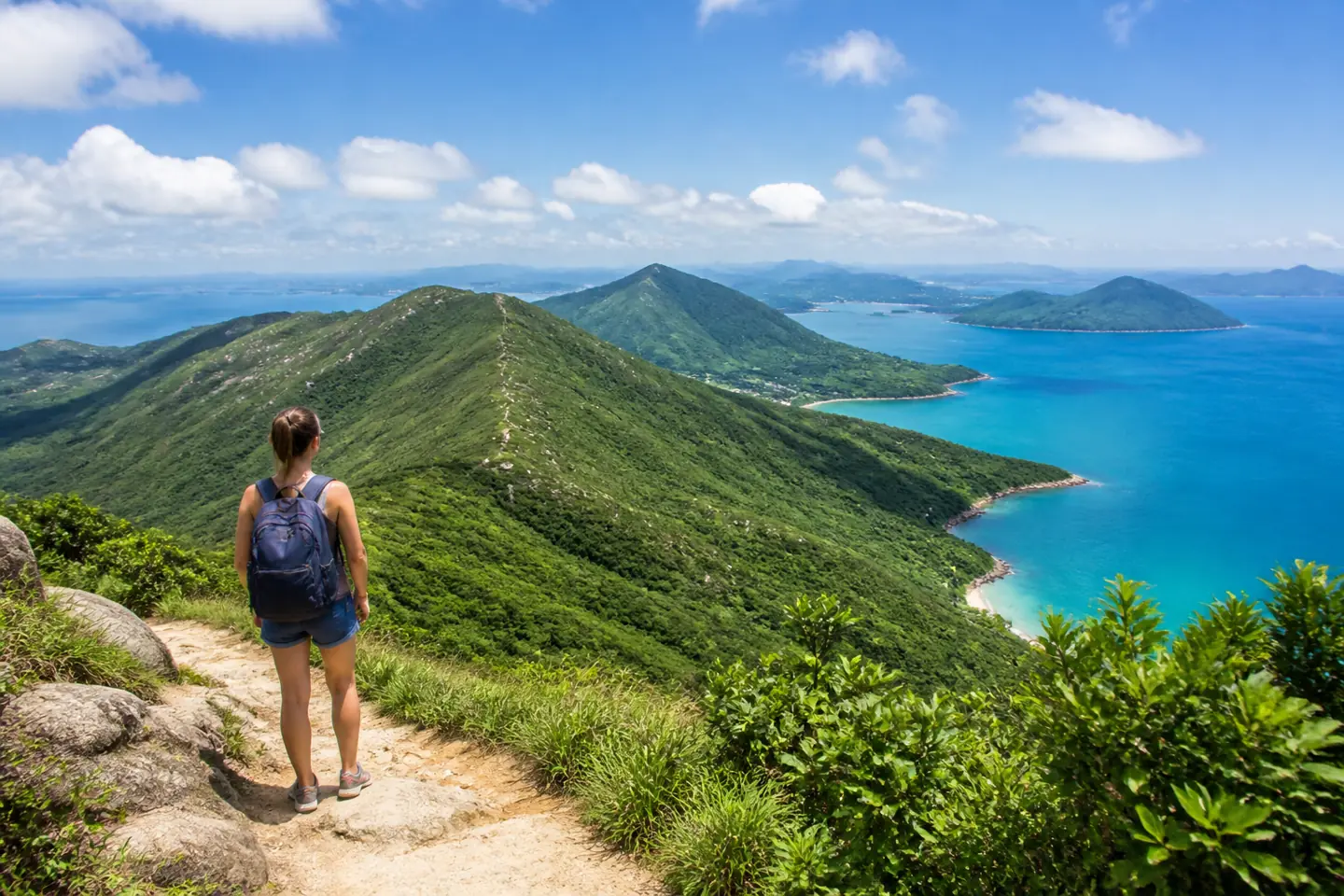
- Hiking. Around 40% of the territory is country park, all of it free and superbly maintained. Start with Dragon's Back (Shek O, 2 hrs, ridge views the whole way), then Lion Rock (Kowloon, steep, best city panorama), Sunset Peak (Lantau, wild and high), Ma On Shan, Suicide Cliff (harder than it sounds, do not go alone), and sections of the 100 km MacLehose Trail. Go early, take 2 litres of water, and download the AMS Hiking Trail maps.
- Beaches. Repulse Bay and Shek O on the island, Big Wave Bay for surfing, Clear Water Bay near HKUST, Hap Mun Bay and Tai Long Wan out at Sai Kung. All free, most with lifeguards from April to October.
- Parks. Kowloon Park, Victoria Park, Hong Kong Park with its aviary, and Nan Lian Garden in Diamond Hill, a meticulous Tang-dynasty-style garden that is free and almost silent.
- Museums. Government museums are HK$10–30 with a student card, and permanent collections are free on Wednesdays. The Museum of History's Hong Kong Story, M+ in West Kowloon (contemporary art, extraordinary building), the Palace Museum, Tai Kwun in the old Central Police Station.
- Star Ferry. HK$3.70 for the best view in Asia. Sit on the lower deck, upper level at sunset.
- Markets at night. Temple Street, Ladies' Market, Mong Kok's sneaker street, the Yau Ma Tei fruit market at 3 a.m.
- Festivals. Free and spectacular: Lunar New Year fireworks and flower markets, Mid-Autumn lantern displays in Victoria Park, the Tai Hang Fire Dragon Dance, Cheung Chau's Bun Festival, dragon boat races in June.
Weekends away
| Place | Getting there | Why go |
|---|---|---|
| Sai Kung | MTR to Choi Hung then minibus 1A, ~60 min from Kowloon | Hong Kong's back garden: seafood on the waterfront, sampans to Sharp Island, and the UNESCO Geopark's hexagonal rock columns |
| Lamma Island | 30 min ferry from Central, HK$18–24 | Car-free, low-rise, a 90-minute walk across the island between two villages, seafood at Sok Kwu Wan. The classic student Sunday |
| Cheung Chau | 35–60 min ferry from Central | A working fishing village, bicycle-only lanes, cheap seafood, a small beach, and the Bun Festival in May |
| Tai O, Lantau | MTR to Tung Chung then bus 11, ~2 hrs total | Stilt houses over the water, dried seafood, pink dolphins if you are lucky. Combine with the Big Buddha |
| Big Buddha & Po Lin, Lantau | Ngong Ping 360 cable car from Tung Chung, HK$235 return | The 25-minute cable car is the point. Vegetarian lunch at the monastery |
| Peng Chau / Mui Wo | Ferry from Central | The quiet ones. Mui Wo has a proper beach and a bus to Tai O |
| Macau | 60 min ferry, HK$175 | Portuguese colonial streets, egg tarts, and the strangest skyline in Asia. Doable as a day trip |
Sport and fitness
- University gyms are the bargain of your degree: HK$0–300 per semester for weights, cardio, a 50 m pool, squash and badminton courts, and often free classes.
- LCSD public facilities are extraordinary value: public swimming pools HK$17 a session, tennis and badminton courts HK$50–70 an hour, football pitches, running tracks, and free outdoor fitness stations in most parks. Book through SmartPLAY online, and book early because locals are quick.
- Running. Bowen Road (flat, shaded, 4 km, Mid-Levels), the Tsim Sha Tsui and Wan Chai harbourfront promenades, Shing Mun Reservoir, the Sha Tin riverside path, and Tai Po waterfront. Summer running means 06:30 or 20:00, not midday.
- Team sport. Intramural leagues, hall teams and inter-university competition in football, basketball, volleyball, rugby, and dragon boat, which is a genuine Hong Kong institution and takes complete beginners.
- Climbing at Just Climb or Verm City, open water swimming at Deep Water Bay, surfing at Big Wave Bay, hiking groups on Meetup and Facebook that run every weekend.
- Commercial gyms: Pure Fitness, Physical, Anytime Fitness, from HK$300–800/month with student and off-peak rates. Negotiate; membership prices in Hong Kong are always negotiable.
Your mental health
Culture shock is not a metaphor and it is not a character flaw. It has a shape most people move through: two to four weeks of excitement, then a slump somewhere between weeks six and twelve when the novelty is gone and the difficulty is not, then gradual adjustment. Knowing the slump is coming makes it much easier to sit through.
Use the counselling service
Free, confidential, and staffed by people who work with international students constantly. Book early rather than at breaking point, because waiting lists exist. Nothing goes on your academic record and it has no bearing on your visa.
Keep a routine
Fixed sleep and wake times, fixed meals, one fixed exercise slot, one fixed social thing. Structure is what stops a bad week becoming a bad month.
Move your body
The most reliably effective intervention available, and it is free here. A hike on Saturday morning changes an entire week.
Stay in touch, but not all the time
A scheduled weekly call home is better than a constant trickle. Living in two places at once is exhausting.
Do not audit your life against Instagram
Everyone's feed is a highlight reel of the same six viewpoints. Quiet weekends are normal and most people are having more of them than they show.
Sleep
Hong Kong will happily keep you out until 3 a.m. every night of the week. Your grades and your mood both go first. Guard 7–8 hours.
Your university counselling service — free, confidential, usually same-week for urgent cases. The Samaritans: 2896 0000 — 24 hours, multilingual, and they take calls about loneliness and stress, not just crises. Suicide Prevention Services: 2382 0000. 999 for an emergency. If you are worried about a friend, telling their hall tutor or the counselling service is the right call, not a betrayal.
Making friends
- Say yes for the first month, then curate. Almost every durable friendship here starts at something someone was too tired to attend.
- Societies, not just one. Join based on genuine interest and turn up three times before deciding. Friendship is a function of repeated exposure, not chemistry.
- Language exchange is the highest-leverage thing an international student can do: you learn Cantonese, they practise English, and you get a local friend who explains the city to you. Most universities run a formal programme.
- Halls. If you live in one, the floor and the dining hall are your social base. Prop your door open in the first fortnight.
- Volunteering with HandsOn Hong Kong, Crossroads or a university project. Instant common ground with people outside your course.
- Religious communities — churches, mosques, temples, the Jewish Community Centre — are active, welcoming, and frequently the fastest route to a support network for students far from home.
- Do not only befriend people from your own country. It is the comfortable choice in week one and the limiting one by year two. Both matter; keep the balance deliberate.
- Invite people to things. Someone has to. Being the person who starts the group chat is a superpower and costs nothing.
Safety
Hong Kong is consistently ranked among the safest large cities in the world. Violent crime is rare, walking alone at night is normal, and the police are approachable and English-speaking. The realistic risks are pickpockets in crowds, hiking accidents, and traffic.
- 999 for police, fire or ambulance. English operators, and you can text 992 if you cannot speak.
- Keep bags zipped and in front of you in Mong Kok, Temple Street, the MTR at rush hour, and festival crowds.
- Hiking is where students actually get hurt. Tell someone your route, take 2 litres of water, start early, do not attempt a ridge in a rainstorm warning, and never scramble alone. Mountain rescue is 999.
- Look right, then left. Traffic drives on the left. Minibuses in particular do not expect you.
- Typhoons: when Signal 8 is hoisted, everything closes, transport stops within about 2 hours, and you should be indoors and away from windows. Check MyObservatory. A Black Rainstorm Warning means flash flooding and landslides; stay put.
- Save your university's 24-hour security number and your hall warden's number.
Samaritans, 999, and the rest, at Station 16.